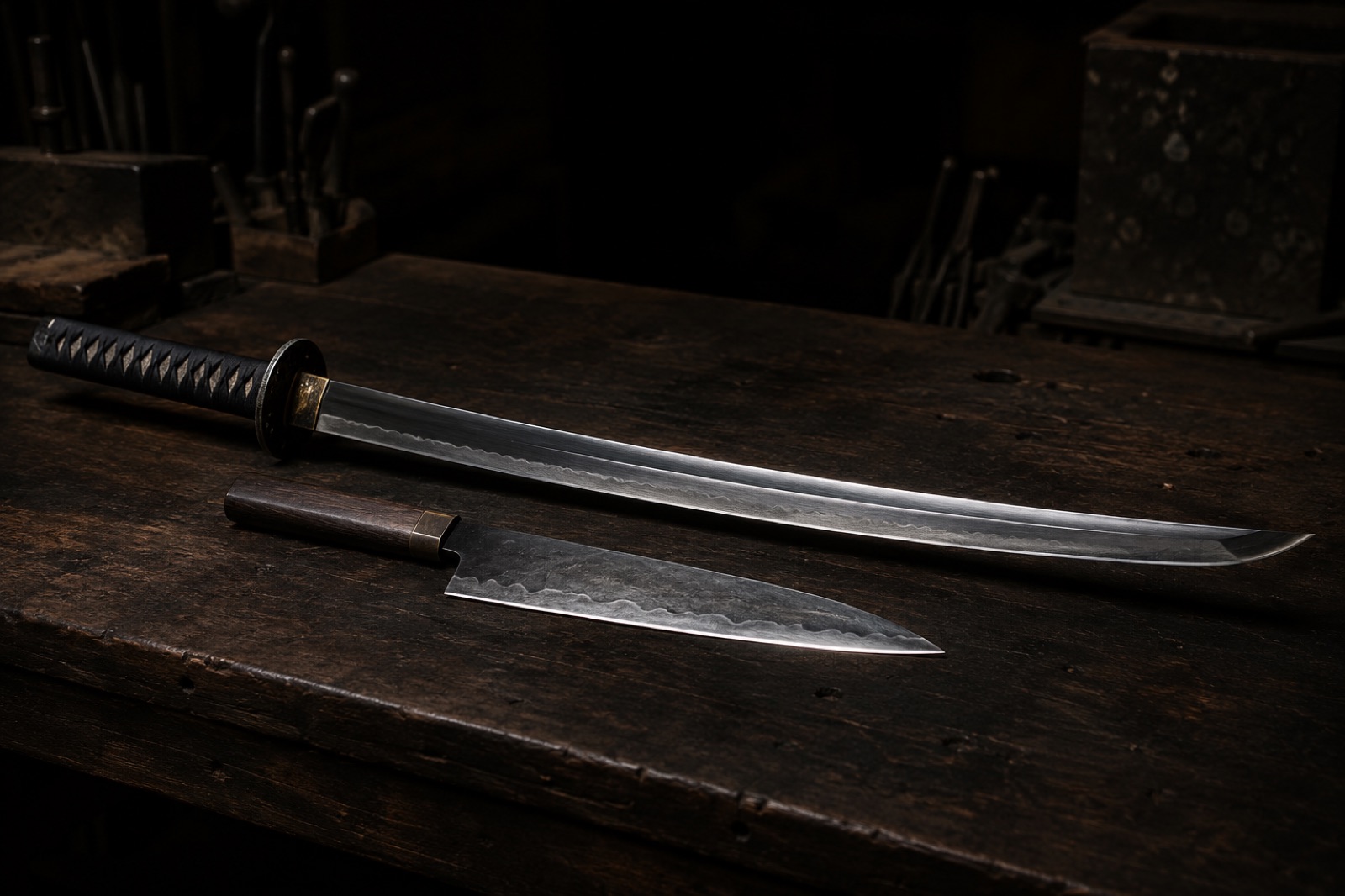
Craft & History
From Sword to Kitchen Knife: How the Samurai's Blade Reached Your Table
The sword’s construction: hardness and toughness, together
Pick up a good Japanese kitchen knife and it’s hard not to think of a sword: the mirror-polished steel, the razor edge, the name of a famous blade-making town on the box. That association isn’t wrong, exactly — it’s just not the simple story the marketing tells you. It isn’t a samurai’s sword, reborn.
So how did sword-making actually become kitchen-knife-making? Follow the Japanese-language primary sources and you find swordsmiths put out of work by two centuries of peace, a gun-and-tobacco boom that built an entire blade-making town, and — just as important — the makers’ own warnings against claiming too much.
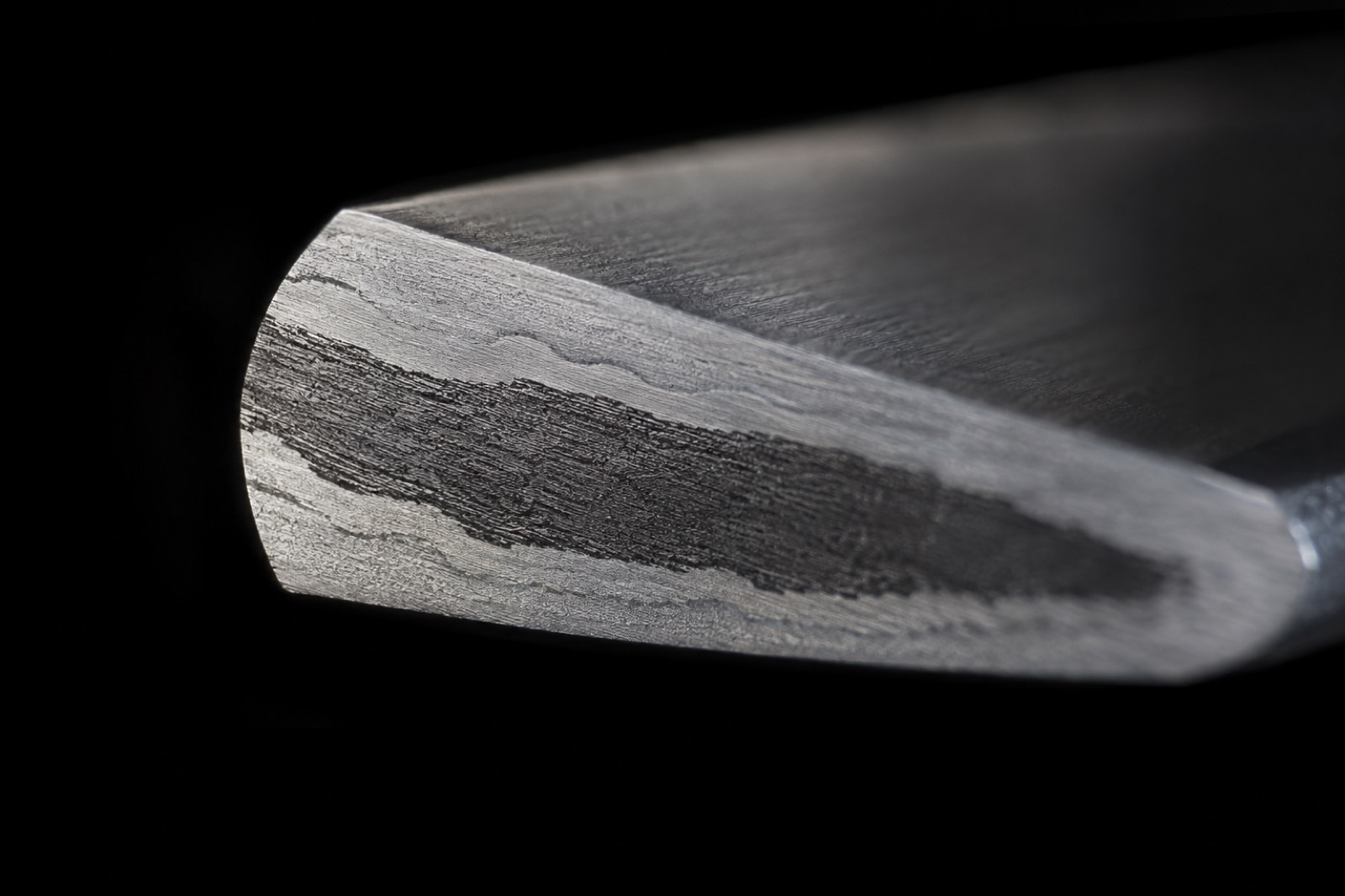
Start with the sword itself. A Japanese blade is built by tsukurikomi — wrapping a hard outer steel (kawagane) around a softer, more flexible core (shingane). The result is a blade that’s hard enough to take a fine edge, yet springy enough at the core to resist snapping.
Steel that’s only hard is sharp but brittle. Iron that’s only soft holds together but won’t cut well. Combining two different metals to get both properties at once — that idea is the backbone of everything that came after, including the kitchen knife. (For the metallurgy behind why that combination cuts so well, see Why Are Japanese Kitchen Knives So Sharp?.)
When the swords ran out of work
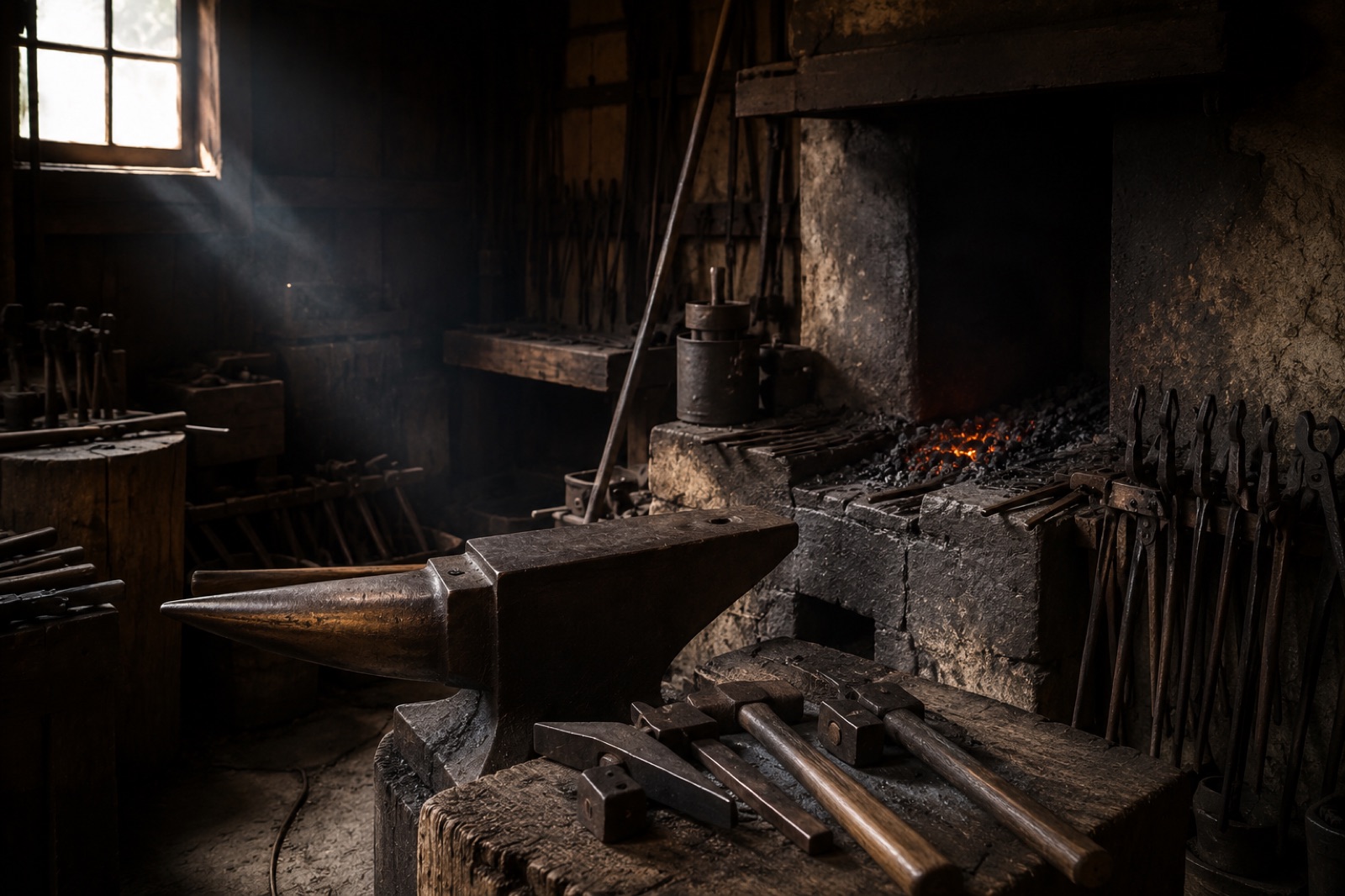
What actually changed the sword’s fate wasn’t war — it was peace. During the Edo period, the disappearance of large-scale warfare collapsed demand for swords, and swordsmiths lost their livelihood — which is why swordsmiths began making kitchen knives instead.
Then, in 1876 (Meiji 9), the Haitōrei edict banned the wearing of swords outright. It’s tempting to treat that as the dramatic turning point — but the record is more modest. By that point, many smiths who had specialized in swords had already shifted into bladed tools such as kitchen knives, and some research suggests the sword ban actually had limited impact on Seki’s blade industry. The 1876 ban reads less like a sudden break and more like the closing chapter of a shift that was already well underway.
In Seki, that shift produced a milestone: in 1888 (Meiji 21), the craftsman Fukuchi Hiroemon made Japan’s first domestically produced pocketknife — opening the road to what would become one of the world’s great cutlery towns.
Sakai: the swordsmiths’ descendants who built a knife town
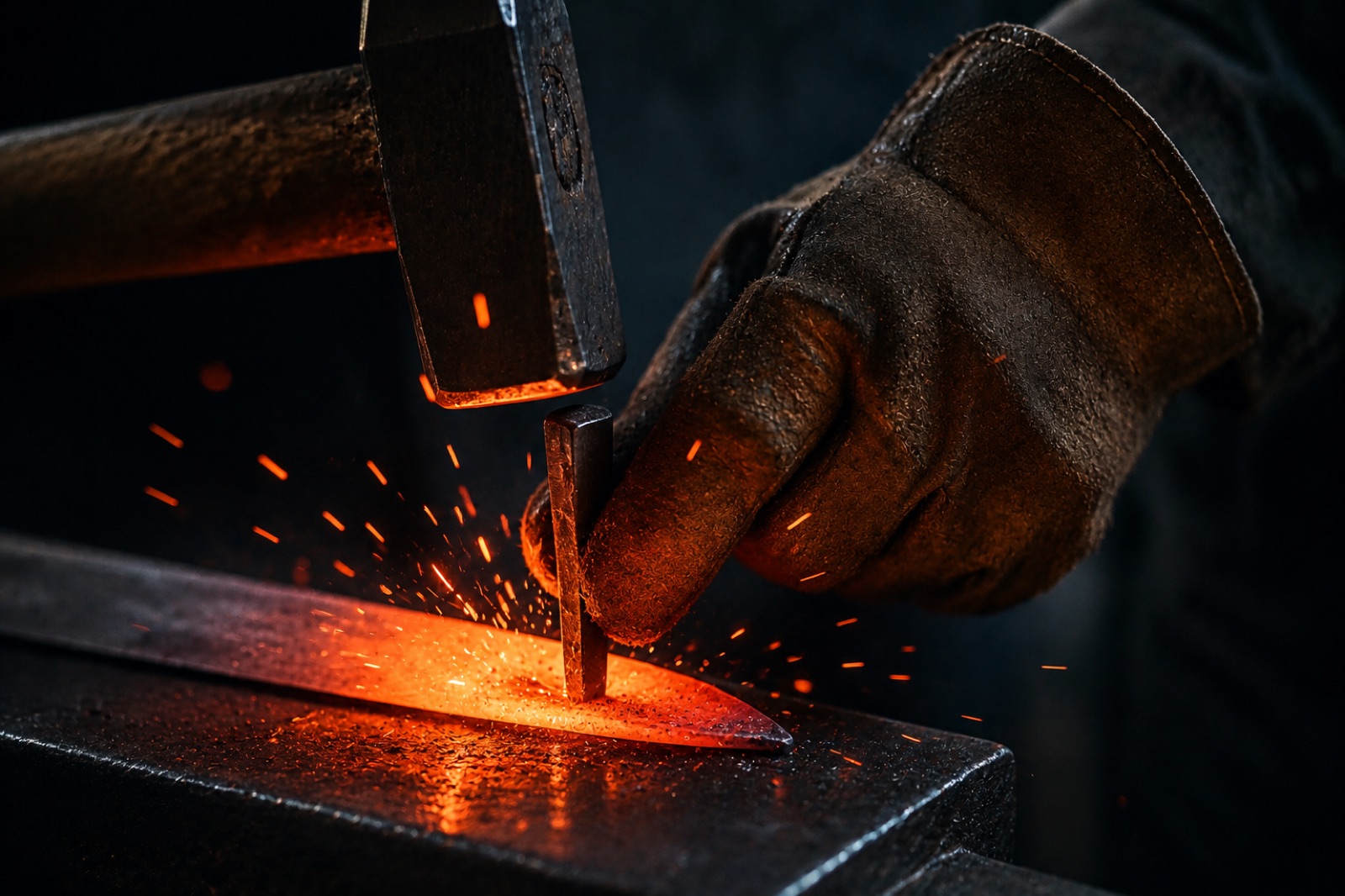
Nowhere is the sword-to-knife lineage more visible than in Sakai, Osaka. Sakai’s blade-making history runs 600 years, beginning in the 15th century when a group of kitchen-knife smiths descended from swordsmiths migrated from Kaga Province to Sakai (with roots said to trace back as far as the 5th century).
What turned Sakai into a powerhouse was guns and tobacco. When the Portuguese brought both to Japan, Sakai’s smiths put their blade-making skill to work on matchlock guns and on tabako-bōchō — tobacco-cutting knives — which the Edo shogunate authorized for sale under the Sakai-kiwame (“Sakai’s finest”) stamp. It was an early version of a quality mark: a shogunate-backed brand guarantee.
That tradition carried straight into cooking knives. Today, Sakai supplies most of the knives used by professional Japanese chefs — some sources put its share of the national wa-bōchō (Japanese-style knife) market above 90%. Two things support that dominance: the single-bevel edge, a shape almost unheard of in a world where double bevels are standard, and a strict division of labor, where forging, sharpening, and handle-fitting are each a separate specialist’s craft. The sharpening step, which uses a chisel to correct subtle warping, is unique to Sakai. Sakai’s forged blades were designated a Japanese Traditional Craft in 1982.
Seki: from a sword town to one of the world’s three great blade regions
The other main character is Seki, in Gifu. Swordsmiths began forging there in the 13th century, drawn by good clay, pine charcoal, and river water. By the late Muromachi period, the smith known as Magoroku (the second-generation Kanemoto) had perfected a forging method, and Seki’s swords — famous for being “un-breaking, un-bending, and sharp” — became favorites of Sengoku-era warlords.
When sword demand fell during the Genroku era, those smiths turned to small knives, kitchen knives, and scissors; after the Meiji sword ban, the shift to bladed tools was complete. Today Seki stands alongside Solingen (Germany) and Sheffield (England) as one of the world’s three great cutlery towns.
A note on honesty: makers describe the wa-bōchō’s technique — forge-welding a soft iron body to a hard cutting-edge steel — as similar to how a sword balances toughness and sharpness by joining its core and outer steels. And the roots really do run through Sakai and other towns where swordsmiths became knife smiths. But that’s a resemblance in thinking, not identical construction — and it’s a lineage of a region and a craft, not of any one blade.
Important: “made like a sword” is a claim worth checking
One maker’s own site makes the caution explicit: calling a honyaki knife “made the same way as a Japanese sword” is, in their words, an overstatement. What can honestly be said is narrower — that the idea of forge-welding different steels together carries over from swords, and that a craft culture founded by swordsmiths was passed down in these regions. An individual knife being a sword’s “direct descendant” is a step further than the evidence supports, and it’s exactly the kind of claim to be skeptical of on a product page.
The takeaway
Your Japanese kitchen knife isn’t a reborn sword. More precisely, it’s the inheritor of the places that made swords — Sakai and Seki — and of the technique and craft culture of combining different steels that those places kept alive. Peace put swordsmiths out of work; guns and tobacco built the towns; and centuries of everyday cooking sharpened the craft into what you can buy today.
So when you’re choosing a knife, look at where it’s from — Sakai, Seki, and the handful of towns like them — and how it’s made. That’s where a thousand years of blade-making history actually lives, without the exaggeration.
Sources
- Nagoya Japanese Sword Museum Nagoya Touken World — Japanese swords and kitchen knives (Japanese; confirmed July 26, 2026)
- Nagoya Japanese Sword Museum Nagoya Touken World — The Sword Abolition Edict and swordsmiths (Japanese; confirmed July 26, 2026)
- Sakai Tourism and Convention Bureau — The 600-year history of Sakai cutlery (Japanese; confirmed July 26, 2026)
- Jikko Cutlery — History of Sakai knives (Japanese; confirmed July 26, 2026)
- Sakai City — Sakai forged blades (Japanese; confirmed July 26, 2026)
- Seki Tourism Association — Seki cutlery and swordsmith history (Japanese; confirmed July 26, 2026)
- Nagoya Japanese Sword Museum Nagoya Touken World — Mino-den and Seki City (Japanese; confirmed July 26, 2026)
- Sakai Ichimonji Mitsuhide — Japanese swords and kitchen knives (Japanese; confirmed July 26, 2026)